
Introduction
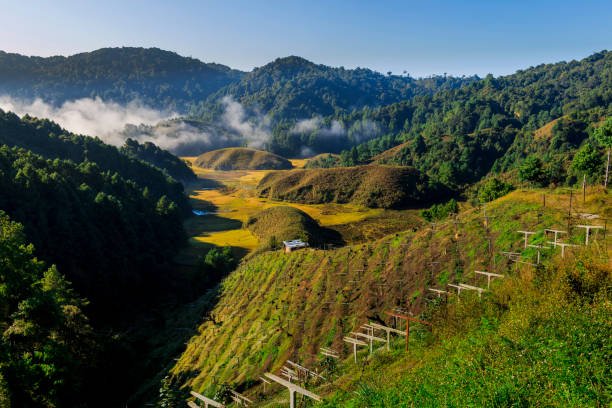
Ask most people to name an Arunachal Pradesh destination, and Tawang comes up almost immediately — the monastery, Sela Pass, the high-altitude drama of it all. Fewer people know about Ziro Valley, a wide, gently terraced bowl of rice paddies and pine ridges in the Lower Subansiri district, home to the Apatani tribe and, for four days every September, one of India’s most talked-about outdoor music festivals.
Ziro is genuinely different from Tawang — lower altitude, gentler terrain, and centred on living tribal culture rather than Buddhist monastic heritage. It’s also seeing a real surge in search interest, largely driven by the growing reputation of the Ziro Music Festival, alongside its status as part of the Apatani Cultural Landscape, which sits on UNESCO’s Tentative List. As the best travel agency in Siliguri, AKKCRUSIER PRIVATE LIMITED increasingly gets asked whether Ziro is worth adding to an Arunachal itinerary — and whether it works alongside Tawang or as a standalone trip. This guide covers everything: the festival, Apatani culture, the permit process, and how to actually get there.
What Makes Ziro Valley Worth Visiting?
- The Apatani Cultural Landscape, recognised on UNESCO’s Tentative List, centred on the Apatani tribe’s distinctive terraced wet-rice cultivation and fish farming system, developed without draft animals or ploughs — a genuinely unique agricultural tradition.
- A completely different landscape from the rest of Arunachal — instead of high mountain passes, Ziro sits in a wide valley of paddy fields and pine forest at a comparatively gentle altitude of around 5,500 feet.
- The Ziro Music Festival, held every September, which has grown into one of Asia’s most respected outdoor, eco-conscious music events.
- A living, welcoming tribal culture — the Apatani are known for their hospitality, distinctive facial tattoos and nose plugs traditionally worn by older generations, and a community structure built around cooperation and shared land management.
The Apatani Tribe: Culture Worth Understanding Before You Visit
The Apatani are among the most well-documented and culturally distinct tribes in Arunachal Pradesh, and much of what makes Ziro special comes directly from their way of life.
- Sustainable agriculture: The Apatani practise a rare integrated system of wet-rice cultivation combined with fish farming in the same paddy fields, without using ploughs or draft animals — a system that has drawn academic and conservation interest well beyond Arunachal.
- Traditional villages: Villages like Hong, Hija, and Ziro town itself offer visitors a genuine look at Apatani architecture, bamboo homes, and daily community life, best experienced with a local guide who can provide proper cultural context.
- Facial tattoos and nose plugs: Older generations of Apatani women traditionally wore distinctive facial tattoos and large nose plugs (called yaping hullo), a practice that has largely died out among younger generations but remains an important part of the tribe’s visual and cultural history — approach this respectfully as living heritage, not a photo opportunity to seek out.
- Community respect matters: As with any tribal cultural visit, always ask before photographing individuals, follow your guide’s lead on village etiquette, and remember you’re a guest in a living community, not visiting a museum exhibit.
The Ziro Music Festival: What to Know
Dates and Format
The Ziro Music Festival 2026 is scheduled for September 24–27, a four-day outdoor event held directly in the valley’s paddy fields and pine ridges, at an elevation of roughly 5,500 feet. Initiated in 2012 by Bobby Hano and Menwhopause guitarist Anup Kutty, and hosted in genuine partnership with the Apatani community, it has grown into one of the most respected independent/indie music festivals in India.
What Makes It Different
- Genuinely eco-conscious: Stages (named Danyi, Pwlo, and the newer electronic stage, Takvr) are built from bamboo and locally sourced materials, reused each year, with a strict no-single-use-plastic policy and free water refill stations.
- Community-led, not corporate: The festival takes place inside a living valley rather than a purpose-built venue, and actively channels tourism income back into the local Apatani community.
- A genuine cultural immersion, not just a concert: Many festival packages include guided Apatani village walks alongside the music line-up, so the experience extends well beyond the stages themselves.
Tickets and Accommodation
- Tickets must be booked through the official festival portal — always verify you’re using the legitimate booking channel rather than a third-party reseller.
- Accommodation is limited and books out months in advance. Hotels in Ziro are few, and homestays are scattered across the valley, often at some distance from the festival site — most attendees opt for organised camping as the standard way to stay during the festival period.
- Book both tickets and stays early if you’re planning around the September festival dates specifically — this is the single biggest planning mistake first-time attendees make.
Do You Need a Permit for Ziro Valley?
Yes — since Ziro sits within Arunachal Pradesh, the same Inner Line Permit (ILP) rules that apply to Tawang apply here too.
- Indian citizens need a Tourist ILP, applied for online through the official portal or offline through Resident Commissioner offices in cities including Delhi, Kolkata, Guwahati, Shillong, Tezpur, Dibrugarh, Jorhat, and Lakhimpur.
- Foreign nationals require a Protected Area Permit (PAP), arranged through the e-FRRO system or an authorised regional office — a longer process than the Indian ILP.
- Carry printed copies of your approved permit alongside your festival tickets if you’re travelling for the Ziro Music Festival specifically — checkposts along the route will verify it.
- (For a full breakdown of the ILP application process, documents required, and entry gates, see our detailed Tawang Tour Guide, since the underlying permit process is identical for both destinations.)
Our advice: As with Tawang, arrange your ILP through your travel agent 5–7 days ahead of travel, particularly if you’re planning around the festival, when permit and accommodation demand both spike sharply at the same time.
How to Reach Ziro Valley
Ziro is genuinely remote, but reachable with some advance planning. There are three main approach routes:
Via Naharlagun (Recommended)
- Take the overnight Donyi Polo Express train from Guwahati to Naharlagun, then continue by shared taxi (roughly 3 hours) to Ziro.
- This is widely considered the smartest option for most travellers — you arrive in Naharlagun rested, sleep, and take an early morning shared Sumo to Ziro, arriving by early afternoon.
- Attempting the full Guwahati-to-Ziro journey in a single stretch is genuinely not recommended — it makes for an exhausting first day and a rough start to your time in the valley.
By Air
- Fly to Donyi Polo Airport (Itanagar), Lilabari, or Dibrugarh, then continue by road — Ziro is roughly 3.5 to 5 hours away by road, depending on which airport you fly into.
By Road from Guwahati
- A direct drive from Guwahati takes around 9 hours, covering scenic but occasionally rough hill roads — feasible, but a long single push best avoided if you have the option to break the journey via Naharlagun instead.
Alternative Route (If Combining with Tawang or Western Assam)
- From Tezpur, drive to Bhalukpong (about 60 km, 1.5 hours) — the same Arunachal entry checkpost used for Tawang-bound travellers — where your ILP is checked, then continue toward Ziro via Itanagar. This route makes sense if you’re building a longer Arunachal circuit that includes both Tawang and Ziro.
Should You Combine Ziro with a Tawang Trip, or Visit Separately?
This is a genuinely fair question, and the honest answer depends on how much time you have.
- Combined trip: Since both destinations require the same ILP and sit within Arunachal Pradesh, a longer itinerary covering Guwahati/Tezpur → Bhalukpong → Bomdila/Dirang → Tawang, followed by a separate leg to Ziro via Itanagar/Naharlagun, is possible — but realistically needs 10–14 days given the distances and terrain involved, and the two regions don’t sit conveniently close to each other within the state.
- Separate trips: Given the distance between the Tawang circuit (West Kameng) and Ziro (Lower Subansiri), many travellers — us included — find it more practical to treat these as two distinct Arunachal trips: a classic Tawang-focused Himalayan journey on one visit, and a Ziro-focused cultural/festival trip on another, particularly if the September festival dates are the main draw.
- If the Ziro Music Festival is your priority, we’d generally recommend building your trip around Ziro specifically, rather than trying to squeeze in Tawang on the same visit — the festival experience benefits from unhurried time in the valley rather than a rushed add-on to a longer circuit.
Best Time to Visit Ziro Valley
- September to October: The prime window, especially for the Ziro Music Festival — the paddy fields turn a golden harvest colour, the air is cool and crisp following the tail end of monsoon, and the pine ridges are at their most vivid green.
- March to May: The best window if you’re visiting purely for the landscape rather than the festival — pleasant weather and clear views across the valley, without the festival-season crowds.
- June to August (monsoon): Not ideal — heavy rainfall affects both road conditions on the approach routes and general comfort for village walks and outdoor exploration.
- November to February: Cold, particularly at night, but generally clear and quiet, appealing to travellers who prefer Ziro without any crowds at all.
Practical Tips for Visiting Ziro Valley
- Book festival tickets and accommodation well in advance if travelling in September — both sell out early.
- Carry warm layers and rain protection even in September, since the valley’s weather can shift quickly, and festival packages typically recommend a raincoat, poncho, and waterproof bag for electronics.
- Hire a local guide for village visits to Hong, Hija, or other Apatani settlements — this ensures respectful, well-contextualised interactions rather than an awkward, uninformed walkthrough.
- Mobile connectivity is limited in much of the valley — download offline maps and don’t rely on real-time navigation.
- Break up long drives via Naharlagun rather than attempting Guwahati-to-Ziro in one push, particularly if you’re travelling with family or older members of your group.
Why Book Your Ziro Valley Trip Through AKKCRUSIER?
Between ILP processing, limited festival-season accommodation, and a genuinely remote route, a Ziro Valley trip benefits significantly from advance, local-knowledge-backed planning — especially around the September festival window, when demand for permits, transport, and stays all spike together. As the best travel agency in Siliguri, AKKCRUSIER PRIVATE LIMITED arranges Ziro Valley and Ziro Music Festival packages, handling ILP processing, transfers via Naharlagun, and accommodation bookings, whether you’re visiting for the festival or the valley’s culture and landscape alone.
Explore our North East India Tour Packages or contact us for a customised Ziro Valley itinerary.
Ready to plan your Ziro Valley trip? Get in touch today for current permit processing timelines and festival-season availability.
Frequently Asked Questions
Q1. When is the Ziro Music Festival 2026? The Ziro Music Festival 2026 is scheduled for September 24–27, held in Ziro Valley’s paddy fields and pine ridges in Arunachal Pradesh.
Q2. Do I need a permit to visit Ziro Valley? Yes. Indian citizens need an Inner Line Permit (ILP), and foreign nationals need a Protected Area Permit (PAP), the same requirement that applies across Arunachal Pradesh, including Tawang.
Q3. What is the best way to reach Ziro Valley from Guwahati? The most comfortable route is the overnight Donyi Polo Express train from Guwahati to Naharlagun, followed by a roughly 3-hour shared taxi ride to Ziro. A direct road journey from Guwahati takes around 9 hours and is best avoided as a single stretch.
Q4. Can Ziro Valley be combined with a Tawang trip? It’s possible but requires 10–14 days given the distance between the two regions within Arunachal Pradesh. Many travellers find it more practical to treat Ziro and Tawang as separate trips.
Q5. What is the best time to visit Ziro Valley outside the festival? March to May offers pleasant weather and clear valley views without festival-season crowds, making it a good alternative window for travellers focused on landscape and culture rather than the music festival.
Q6. Is Ziro Valley suitable for a cultural experience beyond the music festival? Yes. The Apatani Cultural Landscape, including villages like Hong and Hija, offers a genuine, guided look at Apatani traditions, sustainable agriculture, and community life year-round, independent of the September festival.
Planning a trip to Ziro Valley or the Ziro Music Festival? AKKCRUSIER PRIVATE LIMITED, the trusted travel agency in Siliguri, handles complete ILP processing and customised Ziro Valley itineraries. Get in touch today.
