
Introduction
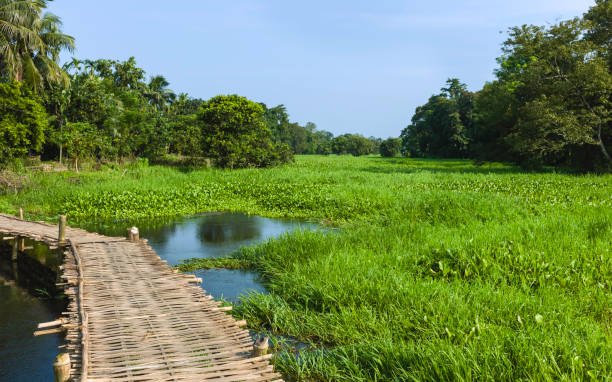
Ask most travellers what Assam is known for, and the answer stops at Kaziranga’s rhinos. Fair enough — but tucked into the middle of the Brahmaputra River, a short ferry ride from Jorhat, sits a destination that genuinely surprises the people who make the effort to reach it: Majuli, the world’s largest river island. It’s a place with its own culture, its own rhythm, and honestly, very little in common with the rest of Assam’s tourist trail.
Majuli isn’t about wildlife safaris or waterfalls. It’s about living Vaishnavite monasteries called Satras, mask-makers who’ve been practising a GI-tagged craft for generations, and a genuinely slow, river-island pace of life that’s rare to find anywhere else in North East India. As the best travel agency in Siliguri, AKKCRUSIER PRIVATE LIMITED has been adding Majuli as a differentiated stop to our Assam itineraries, and this guide covers everything — how to get there, what the Satras and mask villages are actually like, and when to go, given how much the island’s accessibility depends on the Brahmaputra’s water levels.
Where Is Majuli, and How Do You Get There?
Majuli sits roughly 20 km from Jorhat, separated from the mainland by the Brahmaputra River, with the Subansiri River and Kherkutia channel bordering it to the north. It holds the distinction of being the world’s largest river island, and has its own dedicated district status within Assam.
The Ferry Route from Jorhat
- From Jorhat town, drive to Nimati Ghat — roughly 14–20 km, taking about 30–45 minutes.
- Board a government ferry from Nimati Ghat to Kamalabari Ghat on Majuli. The crossing itself takes about 45 minutes to 1.5 hours, depending on river conditions and the exact ferry service.
- Ferry fares are genuinely inexpensive — typically in the range of ₹15–30 per person, with vehicles also transported across for an additional fee (cars around ₹1,500 one-way, motorcycles around ₹500).
- Ferries generally operate between 8:00 AM and 4:00 PM, with the last crossing to Majuli usually departing around 3:00 PM — timing that shifts a little with the seasons and available daylight, so it’s worth confirming the day’s schedule locally rather than assuming a fixed timetable.
Getting to Jorhat First
Jorhat is the gateway city for Majuli, and is well connected:
- By air: Jorhat’s Rowriah Airport has regular flights connecting to Guwahati and other major cities.
- By rail: Jorhat Town Railway Station, or the nearby Furkating station, connect onward to the ghats by taxi or local transport.
- By road: Jorhat is roughly 310–320 km from Guwahati, a drive of around 6–7 hours, and is also easily combined with a Kaziranga visit, since Kaziranga sits only about 90 km (roughly 2 hours) from Jorhat.
The Satras of Majuli: Assam’s Living Monasteries
Majuli is often described as the cultural and spiritual heart of Assamese Vaishnavism, and the reason for that lies in its Satras — monastic institutions founded in the 15th–16th centuries by the saint-reformer Srimanta Sankardev and his disciples, dedicated to preserving Assamese art, music, dance, and devotional practice. The island was once home to as many as 65 Satras; today, around 22 remain active, several of which welcome visitors.
Satras Worth Visiting
- Kamalabari Satra: One of the oldest and most prominent Satras, often the first stop for visitors arriving via the Kamalabari ferry ghat, known for its contribution to classical Assamese dance and music.
- Auniati Satra: Known for its collection of ancient Assamese artefacts, manuscripts, and utensils used in royal ceremonies, along with its own distinctive style of classical dance.
- Dakhinpat Satra: Renowned for hosting some of the island’s most significant Raas Purnima festival performances, considered among the most important cultural celebrations on Majuli.
- Garamur Satra: Another major active monastery worth including if you have a couple of days to explore beyond the most-visited sites.
What to expect: Many Satras hold evening prayer sessions that visitors are welcome to quietly observe — a genuinely moving experience, and one that requires sitting respectfully for around an hour. Dress modestly, keep noise to a minimum, and always ask before photographing monks or ceremonies.
Samaguri Satra & Majuli’s GI-Tagged Mask-Making Tradition
If there’s one experience that sets Majuli apart from every other destination in Assam, it’s the island’s traditional mask-making craft, known as Mukha Shilpa. Practised for centuries, primarily at Samaguri Satra, these masks — made from bamboo, clay, cloth, and cow dung, then hand-painted — are used in traditional Bhaona theatre performances depicting stories from Hindu mythology.
This craft holds enough cultural significance that it received an official Geographical Indication (GI) tag in March 2024, formally recognising it as a unique, protected Majuli tradition.
What to expect: At Samaguri Satra, visitors can watch artisans at work — shaping bamboo frames, applying layers of clay and cloth, and hand-painting the finished masks — and in many cases, purchase a mask directly from the makers as a genuinely meaningful souvenir, quite unlike anything you’d find elsewhere in North East India.
Beyond the Satras: Villages, Craft & Nature
Majuli’s appeal isn’t limited to its monasteries. The island is also home to:
- Mishing tribal villages: The Mishing community, one of Assam’s prominent indigenous groups, maintains a distinct way of life on the island, including traditional stilt houses (called chang ghar) built to cope with seasonal flooding. A homestay with a Mishing family is, for many visitors, the highlight of the entire trip.
- Pottery villages: Several villages on Majuli practise traditional hand-pottery, without a potter’s wheel — a rare, hands-on craft technique worth witnessing.
- Weaving communities: Bamboo-frame looms set up beneath village homes produce traditional Assamese textiles, another glimpse into the island’s largely self-sufficient way of life.
- Birdwatching: Majuli’s wetlands attract a wide range of migratory birds in winter, making it a quietly rewarding stop for birders, alongside its cultural draws.
- Sunset points along the Brahmaputra: Simple, unhurried riverside spots — ideal for cycling out to in the late afternoon, especially near Tengapania.
Getting Around Majuli
Once on the island, options include:
- Bicycle rental (₹80–150/day): The most popular and genuinely enjoyable way to explore, since Majuli is largely flat. Available near the Kamalabari ferry landing.
- Motorcycle/scooter rental (₹400–600/day): Better suited to covering longer distances to the more remote Satras.
- Shared autos/tempos: Cheap but infrequent, plying between the island’s main settlements.
- Private taxi (₹1,500–2,500 for a full day): The easiest option for groups wanting to cover the major Satras and villages comfortably in one day.
A practical note on connectivity and cash: Mobile network coverage is functional in the main settlements (Kamalabari, Garamur) but patchy in the interior villages, and ATMs on the island are unreliable, often running out of cash, especially after weekends. Carry enough cash from Jorhat to comfortably cover your entire stay — a rough guide is ₹2,000–4,000 per person for a 2-day trip, since UPI acceptance is inconsistent given the connectivity constraints.
Best Time to Visit Majuli: Why the Brahmaputra’s Water Level Matters
This is the single most important thing to understand before planning a Majuli trip: the island’s accessibility is directly tied to the Brahmaputra’s seasonal water levels, since ferry crossings depend on manageable river conditions.
- October to March is unanimously considered the best time to visit — the weather is pleasant, ferry services run predictably and on schedule, and this window also coincides with Majuli’s major cultural calendar, including performances tied to the Raas Purnima festival (often around Guru Nanak Jayanti) and generally excellent birdwatching conditions.
- April to May remains a reasonably good window — warmer, but craft workshops and village visits stay accessible, with quieter crowds than peak winter.
- June to September (monsoon) is the period to genuinely avoid. Heavy rainfall causes the Brahmaputra to rise significantly, and ferry schedules are frequently disrupted or suspended entirely, with parts of the island prone to flooding during this stretch. Some parts of the island do stay accessible via improved road connectivity in recent years, but this remains, by far, the least reliable and least rewarding time to visit.
Our honest take: Unlike a destination such as Darjeeling, where monsoon travel is a trade-off worth weighing, Majuli in monsoon isn’t really a version of the destination worth choosing — the entire point of a Majuli trip (ferry access, village walks, unhurried cycling between Satras) depends on conditions that monsoon actively disrupts. Plan this one firmly within the October–March window.
How Many Days Do You Need in Majuli?
- One day (day trip from Jorhat): Technically possible, but genuinely rushed — you’ll see a Satra or two and the mask village, but with little time to actually absorb the island’s slower pace, which is arguably the whole point of coming here.
- Two days: The realistic minimum for a satisfying trip — covers the main Satras, the mask-making workshop at Samaguri, a pottery or weaving village, and a proper sunset by the river.
- Three to four days: Ideal if you want to explore the island’s more remote eastern villages, spend unhurried time at individual Satras, and simply slow down to Majuli’s own pace rather than moving through a checklist.
Our recommendation: Stay overnight, ideally for two nights, in a homestay or eco-cottage at Kamalabari or in a Mishing village. A rushed day trip genuinely doesn’t do the island justice, and Majuli’s accommodation, while simple, is generally comfortable and inexpensive.
Sample 2-Day Majuli Itinerary
Day 1: Drive from Jorhat to Nimati Ghat, ferry across to Kamalabari. Check into your homestay, then visit Kamalabari Satra and Auniati Satra. Cycle to the riverbank for sunset.
Day 2: Morning visit to Samaguri Satra for the mask-making workshop, followed by a walk through a nearby Mishing tribal village and a pottery village. Attend an evening prayer session at a Satra if timing allows, then take the afternoon ferry back to Jorhat.
(This pairs naturally with a Kaziranga safari either before or after your Majuli leg, since both are within easy reach of Jorhat.)
Why Book Your Majuli Trip Through AKKCRUSIER?
Majuli rewards travellers who plan around its ferry schedules, seasonal water levels, and limited on-island infrastructure — exactly the kind of local logistics that are easy to get wrong without on-ground experience. As the best travel agency in Siliguri, AKKCRUSIER PRIVATE LIMITED arranges complete Majuli Island tours, including ferry timing coordination, homestay bookings, and combined itineraries with Kaziranga and Jorhat’s tea estates.
Explore our Assam Tour Packages or contact us for a customised Majuli itinerary.
Ready to plan your Majuli trip? Get in touch today for current ferry schedules and homestay availability.
Frequently Asked Questions
Q1. How do I reach Majuli Island from Jorhat? Drive from Jorhat to Nimati Ghat (about 30–45 minutes), then take a government ferry to Kamalabari Ghat on Majuli, a crossing of roughly 45 minutes to 1.5 hours.
Q2. What is the best time to visit Majuli? October to March is the best window, with predictable ferry services, pleasant weather, and Majuli’s major cultural festivals. June to September (monsoon) should be avoided, since ferry schedules are frequently disrupted by rising Brahmaputra water levels.
Q3. Do I need a permit to visit Majuli? No, no Inner Line Permit or special permission is required to visit Majuli, unlike Tawang or parts of Nagaland, making it easy to plan on relatively short notice.
Q4. What are Satras, and which ones should I visit on Majuli? Satras are Vaishnavite monasteries central to Majuli’s culture. Kamalabari, Auniati, Dakhinpat, and Garamur Satras are among the most significant and welcoming to visitors.
Q5. Is Majuli worth visiting as just a day trip? It’s possible, but genuinely rushed. Two days is the realistic minimum to properly experience the Satras, the mask-making village, and the island’s unhurried pace.
Q6. Can Majuli be combined with a Kaziranga trip? Yes, easily. Kaziranga is only about 90 km (roughly 2 hours) from Jorhat, making it simple to combine both in a single Assam itinerary.
Planning your Assam trip beyond Kaziranga? AKKCRUSIER PRIVATE LIMITED, the trusted travel agency in Siliguri, arranges complete Majuli Island itineraries with ferry coordination and homestay bookings. Get in touch today.
