
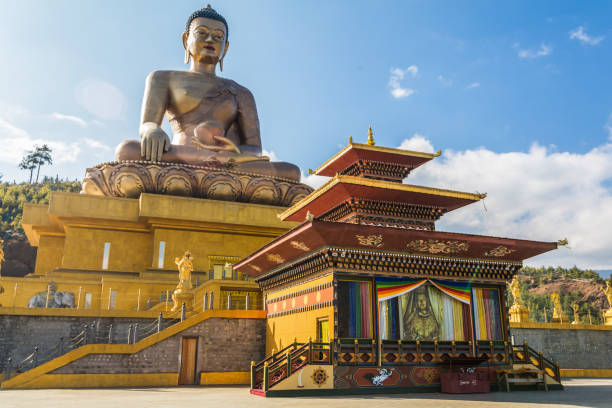
Bhutan, the Land of the Thunder Dragon, is a destination known for its breathtaking Himalayan landscapes, peaceful monasteries, and rich Buddhist heritage. Among the country’s most iconic attractions are its magnificent dzongs. A dzong is a unique fortress-monastery that serves as both a religious center and an administrative headquarters. These architectural masterpieces are deeply rooted in Bhutanese culture and history, making them must-visit attractions for every traveler.
If you are planning a Bhutan holiday, exploring these famous dzongs will give you a deeper understanding of the country’s traditions, spirituality, and royal heritage. Here are the most famous dzongs to visit in Bhutan.
Paro Dzong (Rinpung Dzong)
Paro Dzong is one of Bhutan’s most beautiful and well-preserved fortresses. Built in the 17th century, it overlooks the scenic Paro Valley and stands proudly above the Paro Chhu River.
The dzong is famous for its impressive wooden architecture, massive whitewashed walls, intricate murals, and beautifully carved courtyards. It also serves as the administrative center of Paro District while housing an important monastic community.
Visitors can admire stunning views of the valley, walk across the traditional wooden bridge, and experience the peaceful atmosphere of this historic monument. During the annual Paro Tshechu festival, the dzong becomes the center of colorful mask dances and religious celebrations.
Highlights
- Beautiful Bhutanese architecture
- Traditional wooden bridge
- Panoramic views of Paro Valley
- Venue of the famous Paro Tshechu
Punakha Dzong
Often regarded as the most beautiful dzong in Bhutan, Punakha Dzong is located at the confluence of the Pho Chhu and Mo Chhu rivers. Surrounded by mountains and blooming jacaranda trees during spring, the fortress offers one of the most picturesque settings in the country.
Constructed in 1637, Punakha Dzong was once the capital of Bhutan and continues to hold great religious significance. It is the winter residence of Bhutan’s central monastic body.
Visitors can admire the magnificent prayer halls, sacred relics, elaborate wood carvings, and peaceful courtyards. The riverside location makes it one of the most photographed landmarks in Bhutan.
Highlights
- Bhutan’s most scenic dzong
- Historic capital of Bhutan
- Beautiful riverside location
- Rich religious importance
Thimphu Dzong (Tashichho Dzong)
Located in Bhutan’s capital city, Tashichho Dzong is one of the country’s most important government and religious buildings.
Originally built in the 13th century and later reconstructed, the fortress houses the offices of the King, the throne room, several government ministries, and the summer residence of the Chief Abbot.
The beautifully maintained gardens, golden roofs, white walls, and colorful interiors make it one of Bhutan’s architectural masterpieces. The dzong looks particularly stunning when illuminated during the evening.
Highlights
- Administrative center of Bhutan
- Royal offices
- Beautiful landscaped gardens
- Spectacular night illumination
Wangdue Phodrang Dzong
Perched dramatically on a ridge overlooking the Punatsangchhu River, Wangdue Phodrang Dzong is another historic fortress worth visiting.
Although damaged by fire in 2012, the dzong has been carefully restored while preserving its original architectural beauty.
Its strategic hilltop location offers magnificent views of the surrounding valleys and mountains, making it a favorite stop for photographers.
Highlights
- Stunning hilltop location
- Restored historic fortress
- Scenic mountain views
- Rich historical significance
Trongsa Dzong
Trongsa Dzong is the largest dzong in Bhutan and one of the country’s most historically significant landmarks.
Built across a steep hillside, the fortress overlooks the Mangde Chhu River and connects eastern and western Bhutan. For centuries, it controlled the only route across central Bhutan, making it strategically important.
Today, visitors can explore its maze of temples, courtyards, prayer halls, and ancient watchtowers while enjoying breathtaking mountain scenery.
Highlights
- Largest dzong in Bhutan
- Rich royal history
- Incredible panoramic views
- Historic watchtower museum nearby
Jakar Dzong
Located in the beautiful Bumthang Valley, Jakar Dzong is often called the Fortress of the White Bird.
Legend says a white bird landed on the chosen site, making it an auspicious place for construction. The fortress overlooks lush valleys, traditional villages, and ancient monasteries.
It serves as both a religious center and district administration office while offering visitors peaceful surroundings away from Bhutan’s more crowded destinations.
Highlights
- Beautiful Bumthang Valley location
- Historic Buddhist importance
- Peaceful atmosphere
- Excellent photography opportunities
Simtokha Dzong
Just a short drive from Thimphu, Simtokha Dzong is believed to be the oldest surviving dzong in Bhutan.
Built in 1629 by Zhabdrung Ngawang Namgyal, it played a crucial role in unifying Bhutan.
Today, it houses one of Bhutan’s leading institutes for Buddhist studies and traditional language education. Visitors can admire its ancient murals, prayer wheels, and classic Bhutanese architecture.
Highlights
- Oldest dzong in Bhutan
- Rich educational heritage
- Traditional Buddhist artwork
- Easy access from Thimphu
Trashigang Dzong
Situated in eastern Bhutan, Trashigang Dzong stands dramatically on a cliff overlooking the Drangme Chhu River.
The fortress serves as an important religious and administrative center for eastern Bhutan. Its remote location offers travelers a chance to experience authentic Bhutanese culture away from the popular tourist circuit.
Highlights
- Cliffside location
- Authentic eastern Bhutan experience
- Scenic river views
- Traditional Bhutanese architecture
Why Visit Bhutan’s Dzongs?
Bhutan’s dzongs are much more than historical monuments. They continue to function as active monasteries, government offices, and community centers.
Visiting these magnificent fortresses allows travelers to:
- Experience Bhutan’s living Buddhist culture.
- Learn about Bhutan’s royal history.
- Admire traditional Bhutanese architecture.
- Witness colorful religious festivals.
- Enjoy breathtaking Himalayan landscapes.
- Capture unforgettable travel photographs.
Every dzong tells a unique story about Bhutan’s journey, traditions, and spiritual values.
Best Time to Visit Bhutan’s Dzongs
The ideal time to explore Bhutan’s famous dzongs is during spring from March to May and autumn from September to November.
During these seasons, travelers can enjoy pleasant weather, clear mountain views, blooming landscapes, and vibrant cultural festivals. Many of Bhutan’s famous Tshechu festivals are celebrated within these historic dzongs, offering visitors a chance to witness traditional mask dances, music, and centuries-old rituals.
