
Introduction
Ask any traveller what they’re most excited to see on a Sikkim trip, and Nathu La Pass almost always comes up — the chance to stand at an actual India-China border crossing, just metres from soldiers on the other side, is a genuinely rare experience. Paired with Tsomgo Lake, a glacial lake framed by steep snow-dusted peaks, this East Sikkim circuit is one of the most requested day trips from Gangtok.
It’s also one of the most misunderstood. Unlike most tourist attractions, you can’t simply hire a cab and drive up — Nathu La and Tsomgo Lake sit in a restricted, military-sensitive border zone, which means permits, specific open days, army clearance, and weather conditions all have to align. Every week, our team at AKKCRUSIER PRIVATE LIMITED, the best travel agency in Siliguri, fields the same questions from first-time visitors: How do I get the permit? Which days is it open? Is it safe at that altitude?
This guide answers all of it — the permit process, best time to visit, altitude precautions, and exactly what to expect on the day.
Where Are Nathu La Pass & Tsomgo Lake, Exactly?
- Tsomgo Lake (Changu Lake): Roughly 40 km from Gangtok, at an altitude of about 12,300–12,400 feet. A glacial lake, oval in shape, held sacred by local Buddhist communities.
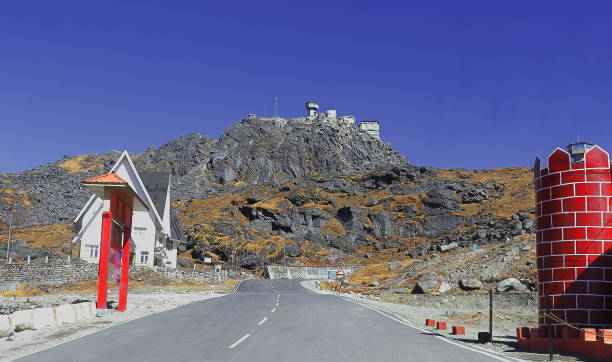
- Nathu La Pass: Roughly 54–56 km from Gangtok, at a much higher altitude of about 14,140 feet (4,310 metres), right on the India-China border in East Sikkim.
- Both are typically visited together in a single day trip, often combined with a stop at Baba Harbhajan Singh Mandir, a revered war memorial temple located between the two.
The full circuit — Gangtok → Tsomgo Lake → Baba Mandir → Nathu La Pass → back to Gangtok — takes a full day, usually starting early (around 7:00 AM) to allow buffer time for checkpoints and weather.
Do You Need a Permit for Nathu La and Tsomgo Lake?
Yes — and this is the single most important thing to plan around before booking your Sikkim trip.
- Tsomgo Lake requires a Protected Area Permit (PAP), since it falls within a restricted border zone.
- Nathu La Pass requires a special one-day permit, issued only for specific days and subject to weather and Indian Army clearance.
- In practice, most operators arrange Tsomgo Lake + Baba Mandir + Nathu La as a single combined permit, so you don’t need to apply separately for each stop.
- Only Indian citizens can visit Nathu La Pass and continue beyond Tsomgo Lake. Foreign nationals are permitted to visit Tsomgo Lake but cannot proceed to Baba Mandir or Nathu La, due to the sensitivity of the international border.
How the Permit Process Works
- Permits are arranged only through registered travel agents/tour operators — this isn’t a permit you can apply for and collect yourself as an individual walk-in traveller.
- Applications are typically submitted one day in advance, using original ID documents and photocopies.
- Permits are subject to a daily quota — only a limited number of vehicles are cleared each day, so early booking matters, especially in peak season.
- Only authorised, Sikkim-registered vehicles with local drivers are permitted beyond Tsomgo Lake — self-driven or private outstation cars are not allowed on this stretch.
- Final confirmation often comes only the evening before or the morning of your visit, since it depends on army clearance and weather at altitude.
Documents You’ll Need
- Valid original photo ID (Voter ID, Passport, or Driving Licence) — carry the original plus 2–3 photocopies
- Passport-size photographs are sometimes requested, so it’s worth carrying a couple as backup
- Children must be included on the permit with supporting ID (birth certificate or school ID) alongside a parent’s document
- Foreign nationals wanting to visit Tsomgo Lake should carry their passport and visa
Our advice: Don’t try to sort this out on arrival in Gangtok. Share your ID details with your travel agent a few days before your trip so your Nathu La Pass permit can be filed and confirmed well in advance.
Which Days Is Nathu La Pass Open?
This trips up more travellers than anything else. Nathu La Pass is typically open only on Wednesday, Thursday, Saturday, and Sunday, remaining closed on other days for administrative and military reasons — and this schedule is always subject to sudden change due to weather or army directives, even on a day it’s normally open.
Practical tip: If Nathu La is closed on your available dates, most operators will still take you to Tsomgo Lake and Baba Mandir, which don’t carry the same day-of-week restriction, so your trip isn’t a complete loss — just build flexibility into your Gangtok itinerary rather than fixing Nathu La to one specific day.
Best Time to Visit Nathu La Pass & Tsomgo Lake
- May to June: One of the best windows — clear skies, pleasant daytime temperatures, and roads generally in good condition after winter snow has cleared.
- September to mid-October: The second ideal window, with crisp post-monsoon visibility, though early October can still carry some tail-end monsoon cloud cover.
- July to August (monsoon): Not recommended — cloud cover often blocks the views entirely, and landslide risk increases on the approach roads.
- December to February: Extremely cold, and Nathu La frequently closes due to heavy snowfall. If it’s open, you may get to see snow-covered landscapes, but always keep a backup plan, since closures at short notice are common in this window.
Our recommendation: Aim for May–June or September–October for the best balance of clear views, safer road conditions, and lower risk of last-minute closure.
Altitude & Health Precautions
Both stops sit at genuinely high altitude, and it’s worth taking seriously rather than treating it as just another sightseeing stop:
- Tsomgo Lake (~12,300 ft) and Nathu La Pass (~14,140 ft) can cause breathlessness, headaches, or mild altitude discomfort, even in otherwise healthy travellers.
- Avoid alcohol for at least 24 hours before the ascent, and don’t rush — walk slowly once you’re out of the vehicle.
- Carry warm layers regardless of season — temperatures at Nathu La can be far colder than Gangtok, even in summer.
- Heavy jackets, gloves, and boots are available for rent at Tsomgo Lake if you haven’t packed your own.
- Travellers with heart or respiratory conditions, pregnant women, and very young children are generally advised to consult a doctor before attempting the Nathu La leg, and some operators may recommend against it for elderly travellers with health concerns.
- If you or anyone in your group starts feeling unwell (dizziness, severe headache, nausea), inform your driver immediately — most vehicles are equipped to descend quickly if needed.
What to Expect on the Day
- Early start: Most day trips leave Gangtok around 7:00 AM to allow time for checkpoints, permit verification, and the winding mountain drive.
- Tsomgo Lake first: You’ll stop here for photos, a short walk along the lake, and optionally a yak or pony ride along the banks (subject to local availability and season).
- Baba Mandir next: A modest but moving stop dedicated to Baba Harbhajan Singh, an Indian Army soldier revered by troops stationed in the region — most visitors spend 15–20 minutes here.
- Nathu La Pass last: The final and highest stop, where you’ll see the actual border fence, an Indian Army exhibition centre, and — on clear days — a distant view into the Chumbi Valley on the Tibetan side. You may even witness the ceremonial Border Personnel Meeting point.
- Photography restrictions: Photography is strictly prohibited at the border fence and near certain army installations — always follow the instructions of army personnel on site.
- Return to Gangtok: The full loop typically wraps up by late afternoon, so plan a light dinner and an early night after a long day at altitude.
Common Mistakes First-Time Visitors Make
- Booking a fixed date without checking Nathu La’s open days — always confirm the weekly schedule before locking your Gangtok itinerary.
- Assuming Aadhaar alone is universally accepted — carry a Voter ID, Passport, or Driving Licence as your primary ID, since acceptance of Aadhaar for this specific permit has varied at different checkpoints; check with your agent beforehand.
- Trying to self-drive beyond Tsomgo Lake — only authorised local vehicles are allowed on the Nathu La stretch.
- Not packing warm clothing in summer — many travellers assume Sikkim in May means no need for jackets, and are caught off guard at 14,000 feet.
- Skipping altitude precautions — treating this like a regular city sightseeing day, rather than a high-altitude excursion.
Why Book Your Nathu La & Tsomgo Lake Trip Through AKKCRUSIER?
Given the permit quotas, weather dependency, and army clearance involved, this is one leg of a Sikkim trip where local expertise genuinely matters. As the best travel agency in Siliguri, AKKCRUSIER PRIVATE LIMITED handles the entire process for you — permit filing, document verification, authorised vehicle arrangement, and real-time updates on Nathu La’s open/closed status — so you’re not left figuring this out after you’ve already arrived in Gangtok.
Explore our Gangtok Tour Packages, which include the Tsomgo Lake–Baba Mandir–Nathu La circuit, or browse our full Sikkim Tour Packages for a complete East and North Sikkim itinerary.
Ready to plan your Nathu La Pass trip? Contact us today to check current permit availability and open days for your travel dates.
Frequently Asked Questions
Q1. Can I visit Nathu La Pass without a permit? No. Nathu La Pass requires a special one-day permit, arranged only through a registered travel agent, and is subject to army and weather clearance.
Q2. Which days is Nathu La Pass open? Nathu La Pass is typically open on Wednesday, Thursday, Saturday, and Sunday, though this is always subject to sudden closure due to weather or military directives.
Q3. Can foreign nationals visit Nathu La Pass? No. Foreign nationals can visit Tsomgo Lake but are not permitted to continue to Baba Mandir or Nathu La Pass, since it sits directly on the international border.
Q4. What is the best time to visit Nathu La Pass and Tsomgo Lake? May to June and September to mid-October offer the clearest skies and safest road conditions. Winter visits are possible but carry a higher risk of last-minute closure due to snowfall.
Q5. Is altitude sickness a concern at Nathu La Pass? Yes, since Nathu La sits at around 14,140 feet. Mild breathlessness or headaches are common; avoid alcohol before the trip, dress warmly, and move slowly once you’re out of the vehicle.
Q6. Can I self-drive to Nathu La Pass? No. Only authorised, Sikkim-registered vehicles with local drivers are permitted beyond Tsomgo Lake on the Nathu La route.
Planning your Sikkim trip? AKKCRUSIER PRIVATE LIMITED, the trusted travel agency in Siliguri, handles complete permit processing for Nathu La, Tsomgo Lake, and all restricted-area destinations across Sikkim. Get in touch today.
