
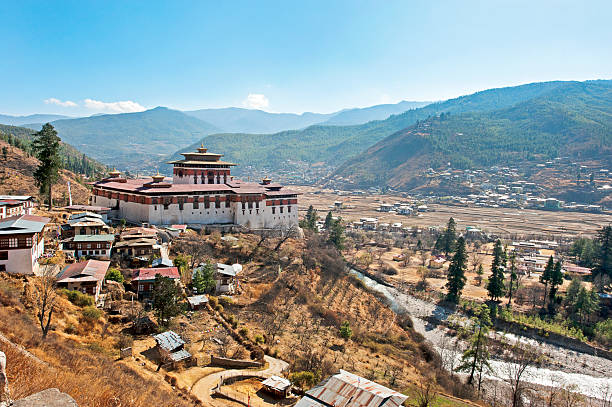
Bhutan, the mystical “Land of the Thunder Dragon,” remains one of the most exclusive and enchanting travel destinations on the planet. Nestled high in the eastern Himalayas, this carbon-negative kingdom is famous for measuring its success by Gross National Happiness rather than Gross Domestic Product. However, its commitment to preserving its pristine environment and rich cultural heritage means that traveling to Bhutan requires careful planning, especially when it comes to paperwork.
If you are planning a trip to this Himalayan paradise in 2026, navigating the visa requirements, permits, and the Sustainable Development Fee (SDF) can seem daunting at first glance. But don’t worry—this comprehensive Bhutan travel documents and permit guide will walk you through everything you need to know to ensure a seamless journey.
Here is the specific table of Bhutan travel documents and requirements tailored exclusively for travelers from India visiting Bhutan in 2026:
| Document / Requirement | Details for Indian Nationals |
|---|---|
| Valid Identification | A valid Indian Passport (with a minimum of 6 months validity from the departure date) OR a valid Voter Identity Card (EPIC). |
| Passport-Sized Photograph | A recent, clear digital passport photo with a white background. |
| Entry Permit | Required instead of a Visa. It is highly recommended to apply for this online in advance to avoid long queues at Paro Airport or the Phuentsholing land border. |
| Sustainable Development Fee (SDF) | Proof of payment for the SDF, which is 1,200 INR per person, per night for Indian nationals (children 6-12 pay 50%; under 6 are exempt). |
| Travel Insurance | A mandatory policy that explicitly covers medical emergencies and unexpected travel disruptions for the duration of your stay in Bhutan. |
| Accommodation Proof | Confirmed hotel booking details for your entire stay. The hotels must be certified by the Tourism Council of Bhutan. |
| Tour Guide Confirmation | Proof of booking with a certified Bhutanese tour guide (mandatory for travel outside immediate Paro and Thimphu valleys). |
| Route Permit (Special Area Permit) | Only required if your itinerary goes beyond the western districts of Paro and Thimphu (e.g., Punakha, Bumthang). Your guide will arrange this for you upon arrival. |
Understanding the Bhutan Visa vs. Entry Permit
The first step in your travel preparation is determining whether you need a Visa or an Entry Permit. The distinction depends entirely on your nationality.
1. International Tourists (Visa Required)
All international tourists—with the exception of citizens from India, Bangladesh, and the Maldives—must obtain a Bhutanese visa before traveling. You cannot board a flight to Bhutan without a pre-approved visa clearance letter. Visas are not issued on arrival for international travelers.
2. Regional Tourists (Entry Permit Required)
Citizens of India, Bangladesh, and the Maldives do not need a traditional visa. Instead, they require an Entry Permit. While this process used to be entirely on-arrival, the Bhutanese government now highly recommends applying for the Entry Permit online in advance to avoid long waiting times at the immigration checkpoints in Paro (airport) or Phuentsholing (land border).
The Sustainable Development Fee (SDF) in 2026
You cannot discuss Bhutan travel documents without addressing the Sustainable Development Fee (SDF). The SDF is a daily levy applied to all tourists, which goes directly toward funding free healthcare, free education, and environmental conservation in Bhutan.
For International Tourists: As of the current regulations extending through 2027, the SDF for international tourists is set at $100 USD per person, per night. (This is a promotional reduction from the previous $200/night fee). Children aged 6 to 12 pay a 50% concessionary rate ($50 USD per night), and children under 6 are exempt from the SDF.
For Regional Tourists: Indian nationals are required to pay an SDF of 1,200 INR per person, per night. Similar age-based concessions apply for children.
Note: The SDF is strictly a government fee. It does not cover your accommodation, meals, transport, or guide. Those must be booked and paid for separately.
Essential Travel Documents Required for 2026
Whether you are applying for a Visa or an Entry Permit, you will need to gather a specific set of documents. Having these ready in digital format will make your application process incredibly smooth.
- A Valid Passport: Your passport must have a minimum validity of six months from your intended date of departure from Bhutan.
- Passport-Sized Photograph: A recent, clear digital passport photo with a white background.
- Travel Insurance: Mandatory for all travelers. Your travel insurance policy must explicitly cover medical emergencies and unexpected travel disruptions for the entire duration of your stay in Bhutan.
- Flight Itinerary: Proof of your arrival and departure tickets.
- Accommodation Proof: Confirmed hotel booking details for your entire stay. (Note: Hotels must be certified by the Tourism Council of Bhutan).
- Tour Guide Confirmation: While experienced travelers can sometimes navigate the visa portal themselves, Bhutan mandates that all tourists must be accompanied by a certified Bhutanese tour guide for any travel outside the immediate Paro and Thimphu valleys.
Step-by-Step Guide to Applying for Your Bhutan Visa
In the past, you could only get a Bhutan visa through a registered Bhutanese tour operator. Today, the process has been modernized, offering travelers two distinct pathways:
Option 1: The DIY Online Portal
The Department of Immigration has launched an official online portal where independent travelers can apply for their own visas.
- Step 1: Visit the official Bhutan immigration website.
- Step 2: Create an account and fill out the visa application form.
- Step 3: Upload your passport copy, photo, travel insurance, and hotel confirmations.
- Step 4: Pay the SDF and the one-time visa processing fee ($40 USD) via credit card.
- Step 5: Wait for approval. Processing typically takes 3 to 5 working days. Once approved, you will receive a digital Visa Clearance Letter. Print this out—you will need to show it to the airline to board your flight.
Option 2: Through a Registered Tour Operator
For a stress-free experience, most travelers still prefer booking through a registered Bhutanese tour operator. When you book a package, the operator handles the entire visa application process on your behalf. You simply email them your passport copy and photo, and they will send you the Visa Clearance Letter once it is approved.
Route Permits for Restricted Areas
Your standard Visa or Entry Permit only allows you to visit the western districts of Paro and Thimphu. If your 2026 itinerary includes venturing deeper into the country—such as visiting the stunning Punakha Dzong, the glacial valley of Phobjikha, or the spiritual heartland of Bumthang—you will need a Route Permit (also known as a Special Area Permit).
How to get it: You do not need to worry about this before you arrive. Your Bhutanese tour guide will arrange the Route Permit for you at the immigration office in Thimphu on your first or second day in the country. The process is usually swift and is handled entirely by your guide.
Pro Tips for a Smooth Entry into Bhutan
To ensure your arrival in Bhutan is as magical as the country itself, keep these final tips in mind:
- Print Everything: While digital copies are great, immigration officers at Paro International Airport appreciate physical printouts. Have printed copies of your Visa Clearance Letter, travel insurance, and hotel bookings ready.
- Carry Cash for the Border: If you are entering via the land border at Phuentsholing, having some local currency (Ngultrum) or Indian Rupees (which are accepted at par) is helpful for immediate small purchases.
- Respect the Culture from Day One: Bhutan has strict rules regarding dress codes, especially when visiting Dzongs (fortresses) and temples. Pack modest clothing with long sleeves and long pants.
- Double-Check Insurance: Ensure your travel insurance explicitly mentions Bhutan. Some generic Asian travel policies exclude high-altitude destinations.
Conclusion
Traveling to Bhutan in 2026 requires a bit more administrative preparation than your average holiday, but the reward is immeasurable. By understanding the difference between visas and permits, budgeting for the Sustainable Development Fee, and gathering your documents in advance, you are setting the stage for a trip of a lifetime.
Bhutan’s strict entry requirements are exactly what keeps the country so pristine, peaceful, and profoundly authentic. Embrace the process, secure your paperwork, and get ready to experience the unparalleled magic of the Land of the Thunder Dragon!
